There isn't one answer that covers every fountain, so the honest response starts with a question of your own: which part, and which model? PetSafe allows the bowl, lid, and pump plate of several of its fountains on the top rack. PETLIBRO and Catit take the opposite approach with their stainless steel models, keeping every plastic and electronic piece out of the dishwasher entirely and limiting machine washing to the metal parts only. Neither of those is wrong. They're just different manufacturers making different calls about their own materials.
What does hold across every brand in this research: the pump, the power adapter, and the filters never go in the dishwasher, no matter what the plastic bowl or tray is rated for.
Why dishwasher use gets restricted in the first place
"Dishwasher-safe" often means one component, not the fountain
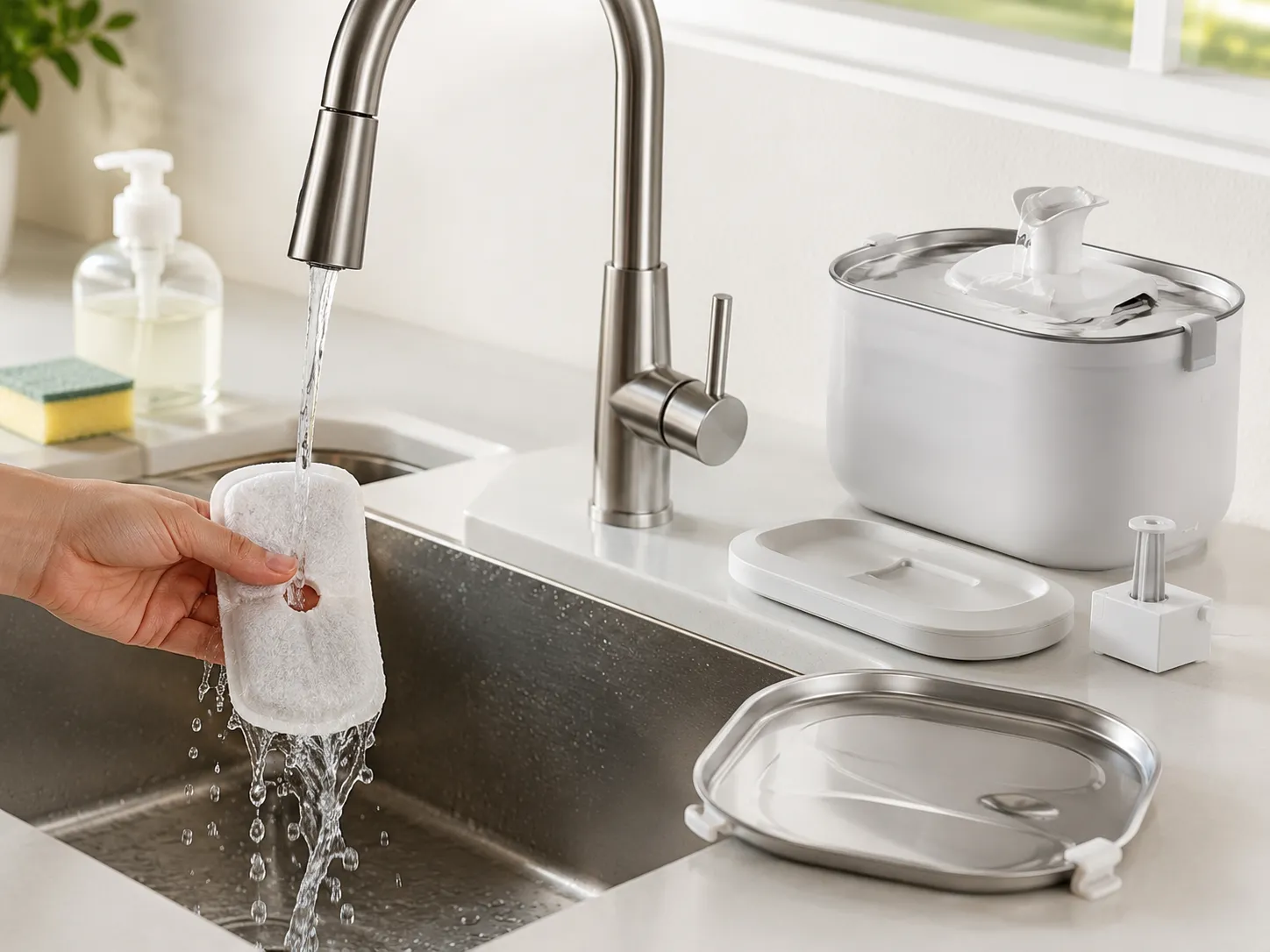
A fountain marketed as dishwasher-safe usually means a specific tray, bowl, lid, or reservoir has been tested for it — not the assembled unit with the pump still attached. PETLIBRO's Dockstream 2, for instance, only clears the stainless steel water tray and the attached filter tray for the dishwasher. Everything else on that fountain gets hand-washed, and the base is never even rinsed under a tap, since it isn't built to handle water at all.
Plastic and dishwasher heat don't always mix
Where manufacturers give numbers, they tend to be specific for a reason. PETLIBRO caps its approved dishwasher parts at under 194°F and limits the cycle to one or two hours, while everything hand-washed stays under 122°F. Those aren't arbitrary figures — they reflect what that particular plastic or seal was actually tested to handle. A cycle that runs hotter or longer than a manual allows can warp or deform plastic components, even ones that look identical to a metal part sitting right next to them in the same machine.
The pump and anything electrical are a separate category, always
Even fountains that submerge their pump during normal use tend to require it be taken apart and hand-cleaned rather than run through a dishwasher. Power adapters, charging ports, DC sockets, and any other electrical connector need to stay completely dry — not just out of the dishwasher, but away from a wet sponge too. This shows up consistently across every manufacturer in this research, plastic fountain or stainless steel.
Filters aren't built for detergent or heat
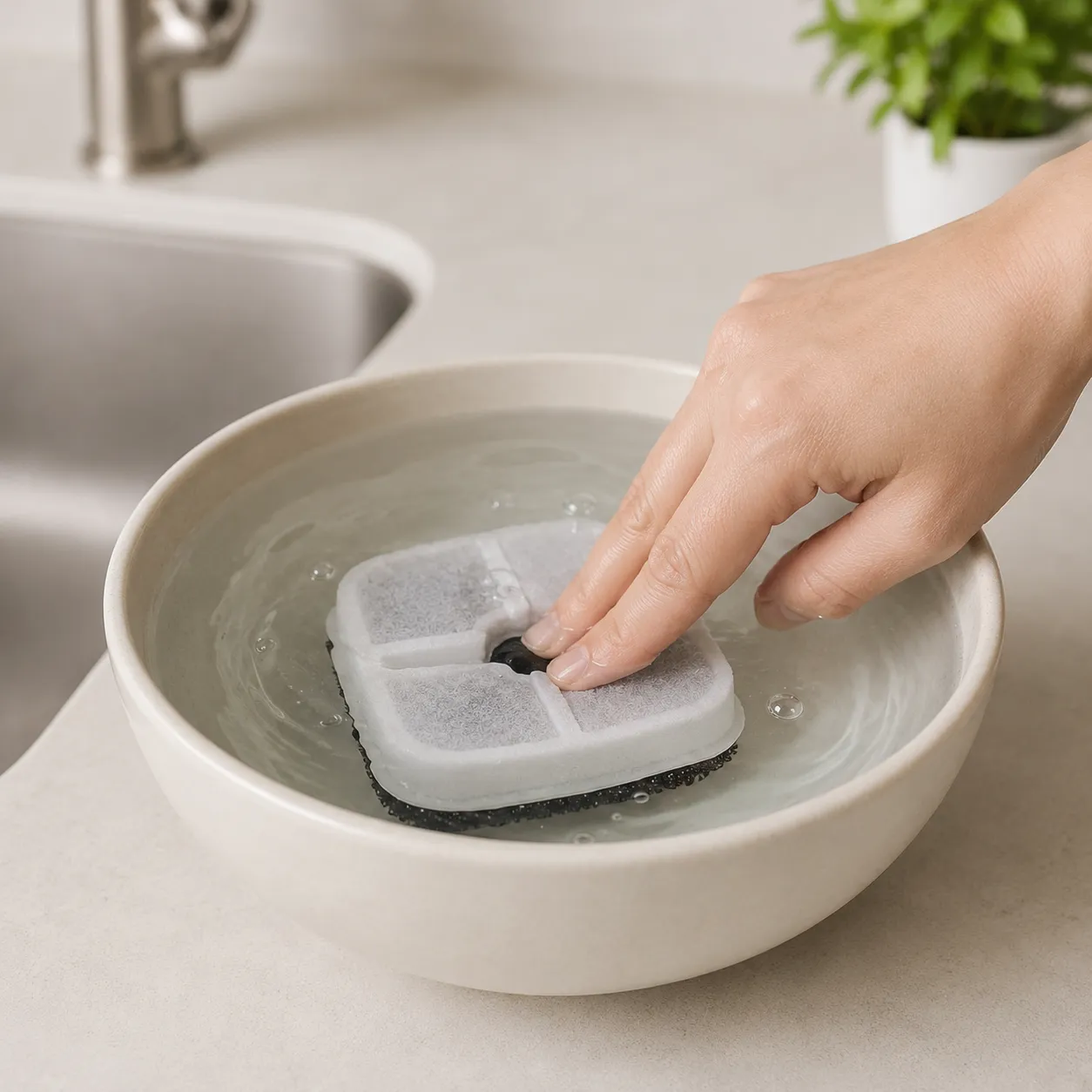
Carbon and foam filters get pulled out before any cleaning happens. Dishwasher detergent can lodge itself in the filter material, and the heat from a cycle can break the filter down faster than it's supposed to wear. Filters get rinsed under running water or replaced on schedule, not run through a machine.
When a plastic part does get dishwasher approval, it's usually top-rack only
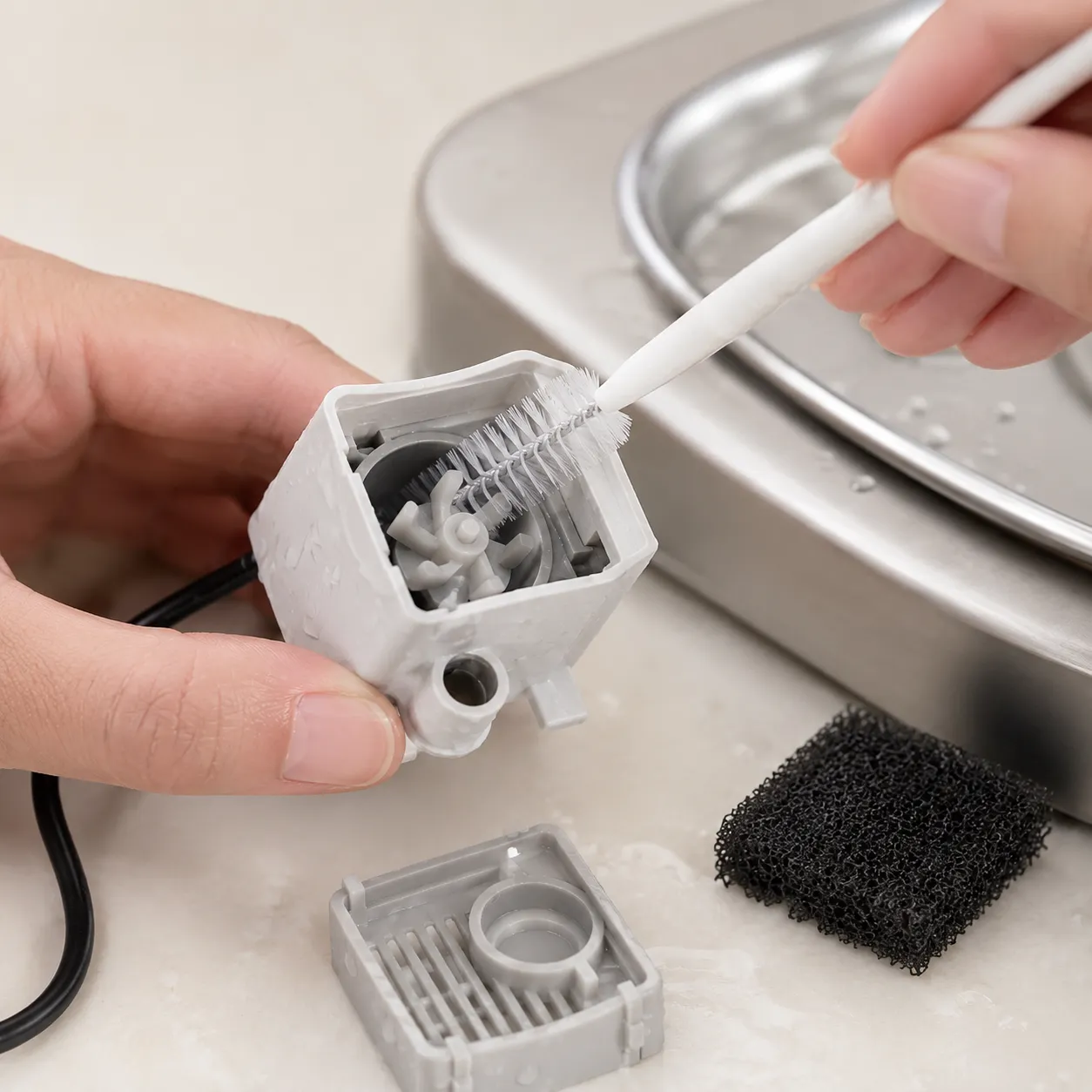
PetSafe's Current fountain is a clear example: the bowl, lid, and pump plate are dishwasher-safe, but specifically on the top rack, while the pump itself still comes apart for a hand cleaning with a small brush. That's the pattern worth remembering — an approval on one or two parts doesn't extend to the rest of the fountain.
Important safety notes
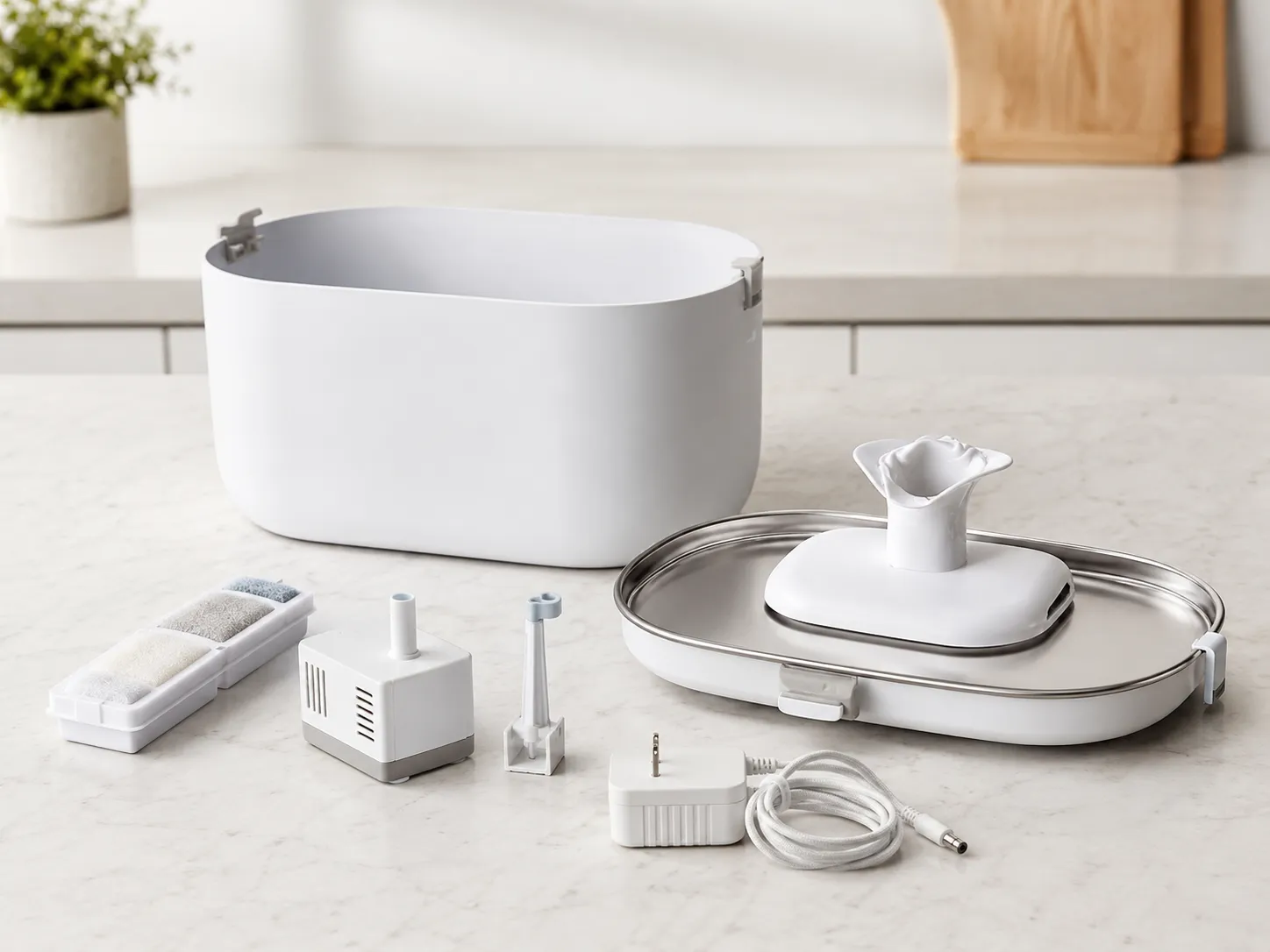
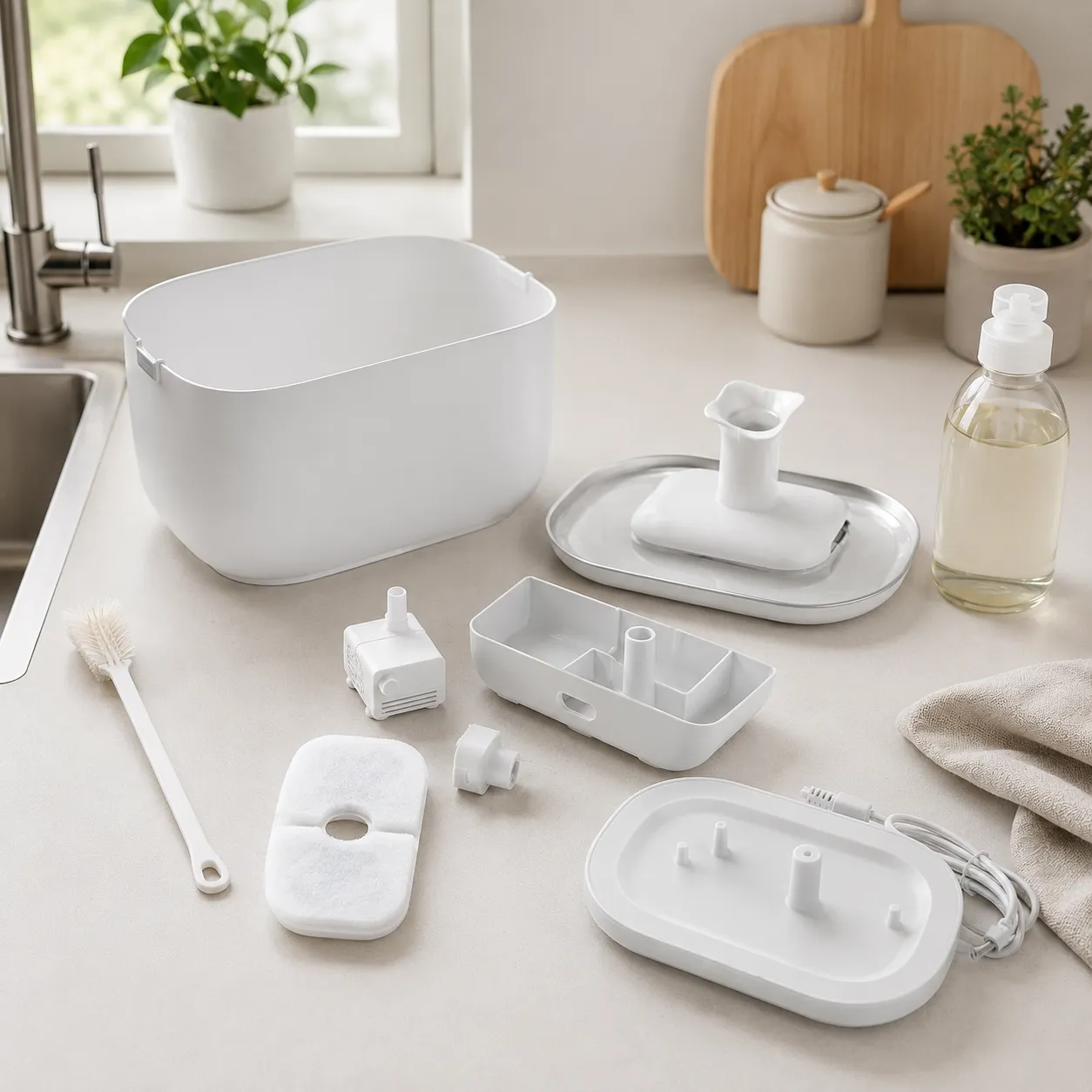
Unplug the fountain and take it apart completely before washing anything, whether that's by hand or in the dishwasher. Keep the cord, adapter, battery compartment, and any electrical contacts dry throughout — a splash from hand-washing a nearby part is enough to cause problems for these components. And don't extend a "dishwasher-safe" label past what the manual actually says it covers; a stainless steel top being dishwasher-safe doesn't tell you anything about the plastic base underneath it.
Common mistakes
- Putting the fully assembled fountain in the dishwasher instead of just the approved parts
- Assuming a stainless steel dishwasher-safe rating extends to the fountain's plastic components
- Running a cycle hotter or longer than the manual's stated limit
- Washing filters with dishwasher detergent instead of rinsing or replacing them
- Letting the pump, adapter, or any charging port get wet during cleanup
FAQ
Can any plastic pet fountain parts go in the dishwasher?
Sometimes, yes. PetSafe allows the bowl, lid, and pump plate of several models on the top rack. It depends entirely on the manufacturer and model, so the manual is the only reliable source for your specific fountain.
Why do some manufacturers keep plastic out of the dishwasher completely?
Materials and heat tolerance vary by model. A part not tested for dishwasher temperatures can warp or deform even if a similar-looking part elsewhere is rated for it. Manufacturers set these limits based on their own testing, not a shared industry standard.
Does the pump ever go in the dishwasher?
No, not in any of the manufacturer instructions covered here. Pumps get disassembled and hand-cleaned, and power adapters or charging components stay dry and out of the dishwasher entirely.
Final note
The safest habit is checking the manual for the exact part in your hands, not going off what "dishwasher-safe" meant on a different fountain you owned before.
Sources
- PetSafe, How To Disassemble and Clean My PetSafe Multi-Tier Pet Fountain. Used for washing plastic fountain parts with warm water and soap or on the dishwasher's top rack, and keeping the pump, power adapter, and filters out of the dishwasher entirely. https://support.petsafe.net/articles/how-to-disassemble-and-clean-my-petsafe-multi-tier-pet-fountain
- PetSafe, How to Clean the Current Pet Fountain. Used for the specific top-rack-only dishwasher approval for the bowl, lid, and pump plate, and the separate hand-cleaning process for the pump. https://support.petsafe.net/articles/how-to-clean-the-current-pet-fountain
- PETLIBRO, Is the Dockstream 2 Smart Fountain Dishwasher Safe? Used for the stainless steel water tray and filter tray being the only dishwasher-safe parts, the 194°F dishwasher temperature limit and one-to-two-hour cycle recommendation, the 122°F hand-wash limit for other parts, and the instruction never to submerge or rinse the base. https://petlibro.com/pages/is-the-dockstream-2-smart-water-fountain-dishwasher-safe
- Catit, Catit PIXI Stainless Steel UV-C Fountain – Cleaning Guide. Used for limiting dishwasher use to the stainless steel parts only, keeping the charging port, DC socket, and pump DC port completely dry, and the monthly deep-cleaning schedule. https://www.catit.com/spotlight/catit-pixi-stainless-steel-uv-c-fountain-cleaning-guide/
- Catit, Flower Fountain Cleaning Guide. Used as an example of a plastic fountain with a hand-washing method only, with no dishwasher approval given. https://www.catit.com/spotlight/catit-flower-fountain-cleaning-guide/