Soap and water get a fountain clean. A separate chemical step is what actually kills the germs left behind, and that step only does its job on a surface that's already been scrubbed. Skip the wash and go straight for a disinfectant, and you're mostly just pouring it over dirt.
Day to day, plain washing is doing almost all the work anyway — the film on the bowl, the gunk around the pump, none of that needs a chemical fix. Disinfecting earns its keep in narrower moments: a pet's been sick, someone in the house is more vulnerable to germs than usual, or the manual for your particular fountain tells you to.
What you need
- Mild dish soap
- A soft brush or sponge, nothing abrasive
- Warm water for washing, cool water for the rinse
- An EPA-registered disinfectant or household bleach, only if the manual doesn't object
- White vinegar, if your manufacturer specifically calls for it
- The manual itself, open and in front of you
Cleaning first, then disinfecting
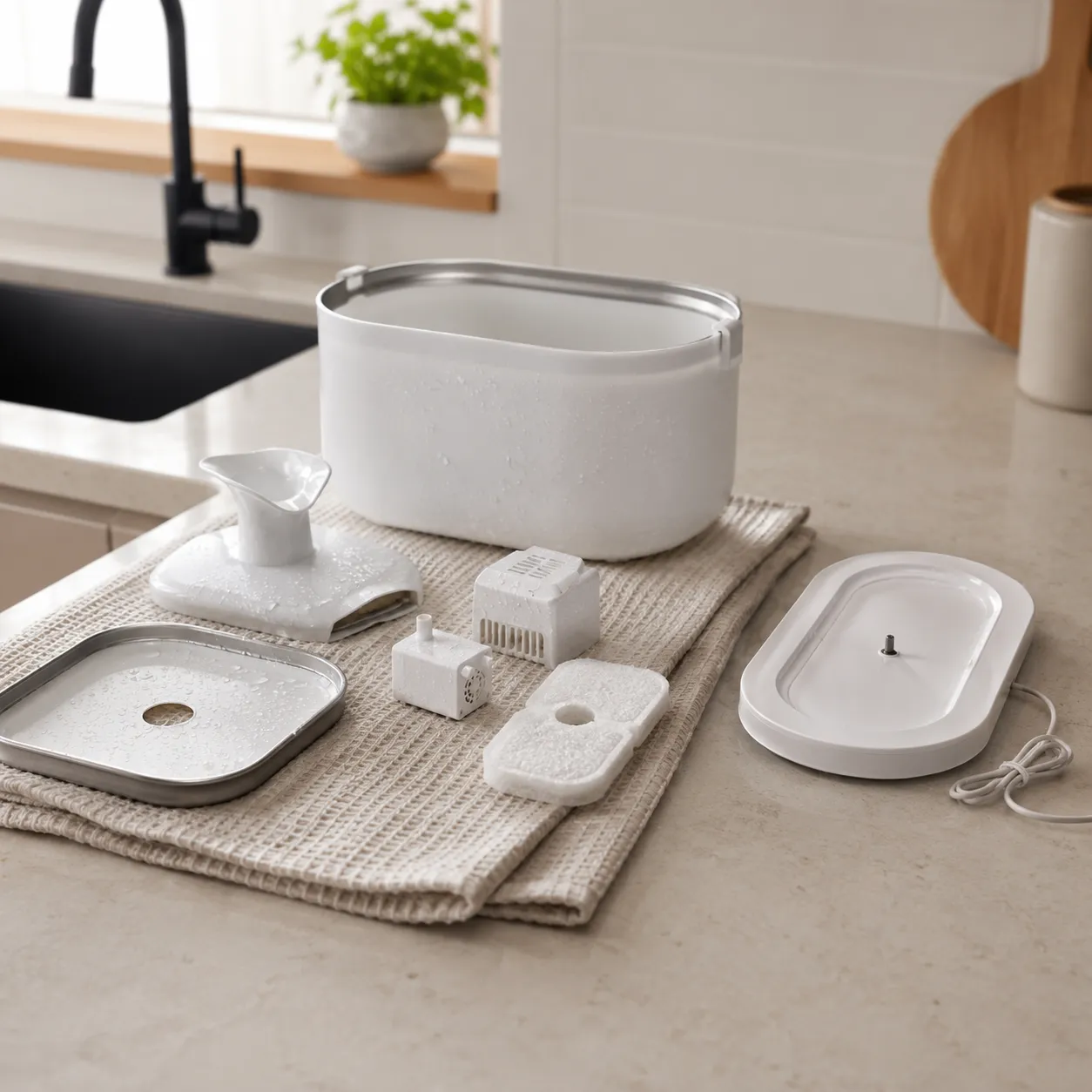
Wash it before anything else
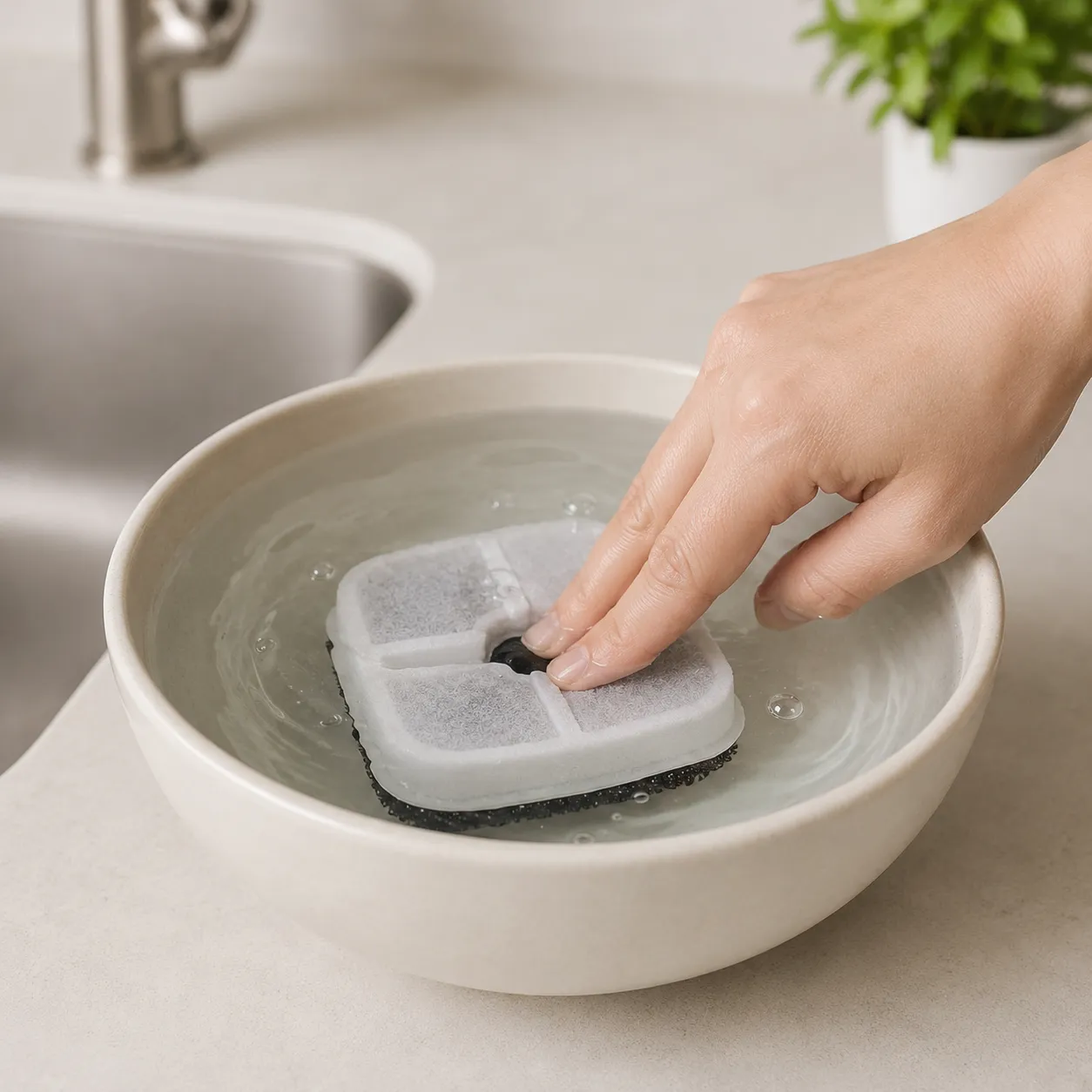
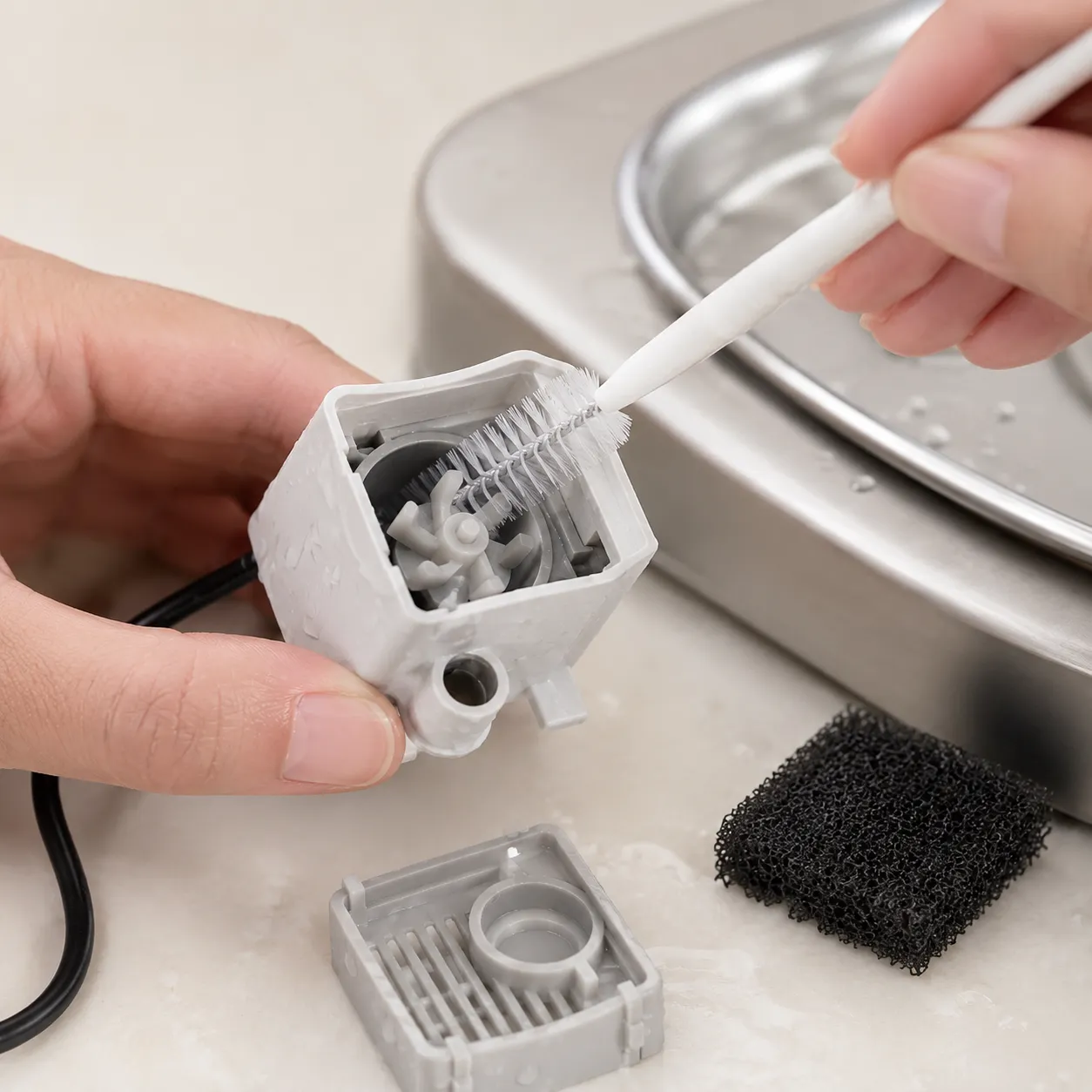
Every washable piece gets soap, warm water, a scrub, and a thorough rinse. That alone clears out the dirt and organic buildup that would otherwise sit between a disinfectant and the germs it's meant to reach. A disinfectant sprayed on a still-dirty surface has grime in the way; it can't do much through that.
Cleaning and disinfecting aren't doing the same thing
One physically removes dirt and germs. The other kills whatever's left with a chemical, after the fact. There's a third term worth knowing too — sanitizing sits in between, cutting down bacteria without the stronger claim disinfectants make against viruses. For a fountain, careful washing covers the routine, and disinfecting is what gets layered on top when something specific calls for it.
Bleach, if your fountain allows it
About 2 ounces of bleach per gallon of water is the standard dilution for hard plastic pet items. Soak the part for at least 10 minutes, or if it won't fit in a basin, wipe it down and let the solution sit wet on the surface that same 10 minutes. Rinse well, dry completely, then refill. Bleach and vinegar (or ammonia, or any other cleaner) never mix — the fumes that result are genuinely dangerous.
Solid, non-electrical parts only. A pump housing or anything sealed is a different story, and plenty of manufacturers won't sign off on bleach touching those parts at all.
Vinegar, if that's what the manual says
Plenty of fountain makers point owners to a diluted white vinegar solution over bleach — but that's usually about mineral scale, not germs. Vinegar can reduce some bacteria given enough contact time, though the research behind it as a real disinfectant is thin, so it's not a stand-in for one. If a manual mentions vinegar, it's almost always talking about calcium deposits, not illness prevention.
Wipes and sprays
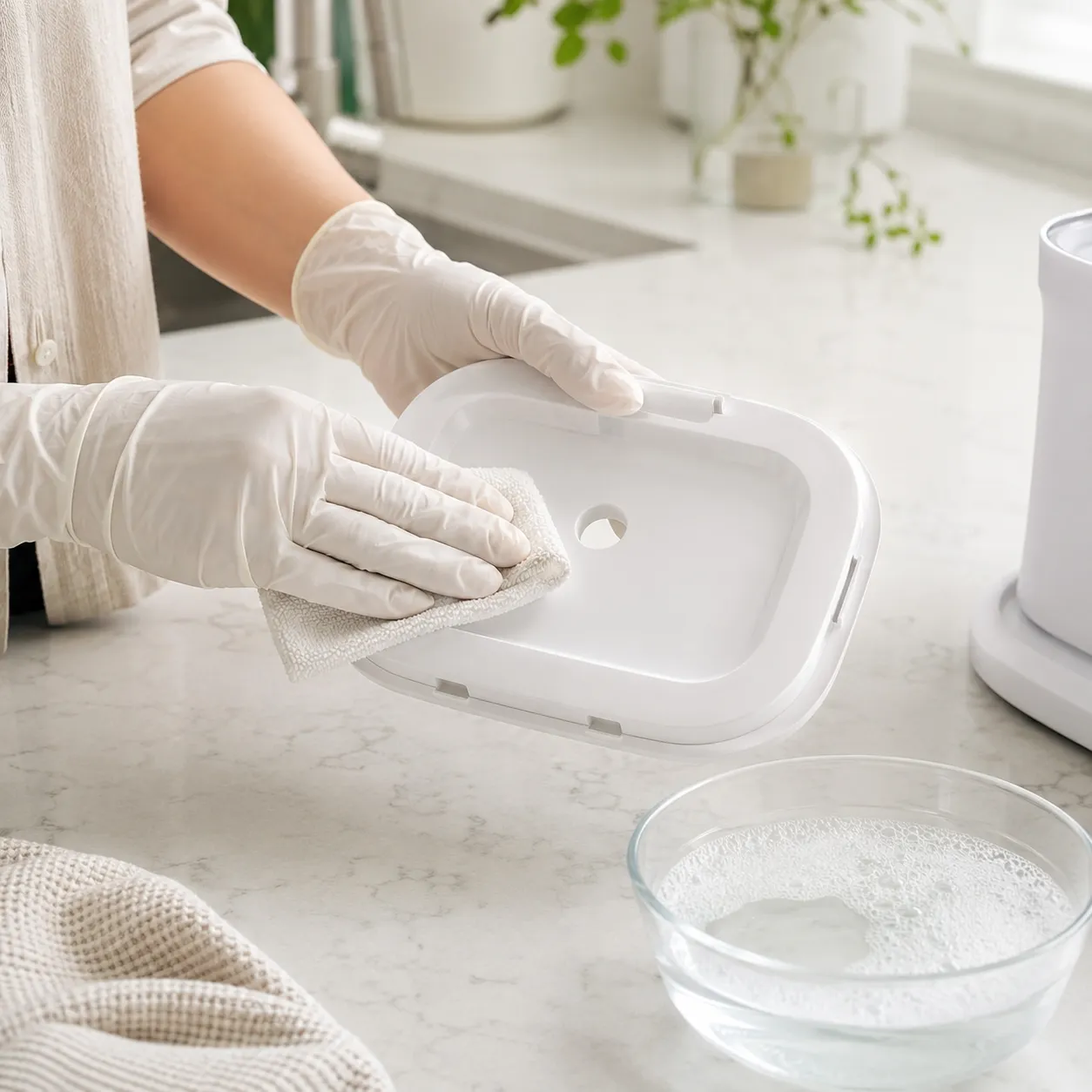
An EPA-registered product, the exact contact time on the label, then air-dry before the fountain goes back into use. Wiping dry or rinsing with water afterward adds one more layer of caution, and it's an easy one to add.
Important safety notes
Unplug the pump before you touch it, and keep the plug, adapter, and battery compartment dry the entire time you're working. Most pumps and electrical housings were never meant to be soaked — soapy water is already pushing it, bleach more so — so the manual is the place to check what's actually washable.
Cat owners should avoid any disinfectant listing phenol as an ingredient; it's toxic to cats and sometimes buried inside a longer chemical name, so it's worth reading the fine print. Keep pets out of the room while cleaning or disinfecting, and don't let them back near the fountain until whatever you used has fully dried or been rinsed off, exactly as the label describes.
When the routine may need to change
A sick pet, a household member with a weakened immune system, or very young or older pets in the home — any of these is reason to clean and disinfect more often than usual. Multi-pet households tend to need the same, simply because more animals drinking from one fountain means buildup shows up faster.
Common mistakes
- Reaching for a disinfectant before the fountain's actually been washed
- Assuming vinegar disinfects the way bleach or an EPA-registered product does
- Letting bleach or another disinfectant touch a part the manual says to keep dry
- Cutting the rinse short, so residue ends up back in the water
- Mixing bleach with vinegar, ammonia, or anything else
FAQ
Is disinfecting a plastic fountain the same as just cleaning it?
No. One removes dirt and germs physically; the other kills what's left with a chemical, and only works once the surface is already clean. Most fountain care lives in that first step — disinfecting is the occasional extra.
Can I just use vinegar to disinfect the fountain?
It's really there for mineral buildup, not disinfection. Given enough time on a surface it can reduce some germs, but the evidence doesn't support treating it as a true disinfectant.
Is bleach safe for a pet fountain?
For the solid, non-electrical parts, generally yes, at the right dilution — but only if the manufacturer hasn't said otherwise for that model. Rinse it out completely and let everything dry before adding water back.
Final note
Wash often. Disinfect only when something specific calls for it. Keeping that order straight covers both jobs without turning either one into more than it needs to be.
Sources
- Centers for Disease Control and Prevention (CDC), About Cleaning and Disinfecting Pet Supplies. Used for the distinction between cleaning and disinfecting, the soapy-water and bleach-solution methods (including bleach dilution and contact time), disinfectant wipe and spray guidance, the caution on vinegar's unproven disinfecting ability, and the phenol warning for cats. https://www.cdc.gov/healthy-pets/about/cleaning-and-disinfecting-pet-supplies.html
- U.S. Environmental Protection Agency (EPA), What's the Difference Between Products That Clean, Sanitize, and Disinfect? Used for the formal definitions of cleaning, sanitizing, and disinfecting, and for the importance of following label contact times. https://www.epa.gov/coronavirus-and-disinfectants/whats-difference-between-products-disinfect-sanitize-and-clean
- PetSafe, How to Clean Your Drinkwell Original Pet Fountain. Used for the monthly cleaning schedule, the more frequent schedule for multi-pet households, washing with soap and warm water, and using a vinegar soak specifically for mineral residue rather than disinfection.
- Catit, Flower Fountain Cleaning Guide. Used for washing all components with mild soap and warm water, avoiding harsh detergents or abrasive sponges, and the biweekly pump-cleaning schedule.
- PETLIBRO, Cat Water Fountain Maintenance 101. Used for the caution against harsh soaps or bleach touching the fountain itself, the monthly diluted-vinegar approach for hard-to-reach mineral buildup, and the distinction between disinfecting nearby surfaces and cleaning the fountain.